


Cash stuffing is a budgeting method where you divide your monthly spending money into cash-filled envelopes by category. You only spend what's in each envelope. When it's empty, you're done.
If you've seen those viral TikTok videos of people stuffing cash into aesthetic binders and wondered, "Does that actually work?" The answer is yes. And you don't need to be a math genius to start.
How to Start
Cash Stuffing for Beginners
Cash stuffing is a budgeting method where you divide your monthly spending money into cash-filled envelopes by category....
Tap-to-pay made spending frictionless, and that's exactly the problem. Your brain processes losing a physical $20 bill very differently than swiping a card for $20. Cash stuffing puts the friction back on purpose.
Most people who try cash stuffing for one month spend less without consciously trying to. The system does the work for you.
Add up everything that hits your bank account in a month after taxes. If your income varies, use the lowest month from the past three. This is your starting number.
Write down every bill that's the same every month: rent or mortgage, car payment, insurance, phone, streaming services, gym. Subtract these from your take-home pay. What's left is what you have to work with for variable spending and savings.
This is where beginners overcomplicate things. You don't need 20 categories. Start with the ones where you actually spend cash week to week:
- Groceries
- Gas / transportation
- Eating out
- Personal care (beauty, hair, nails)
- Fun money (anything you want)
- Household (cleaning supplies, random Target runs)
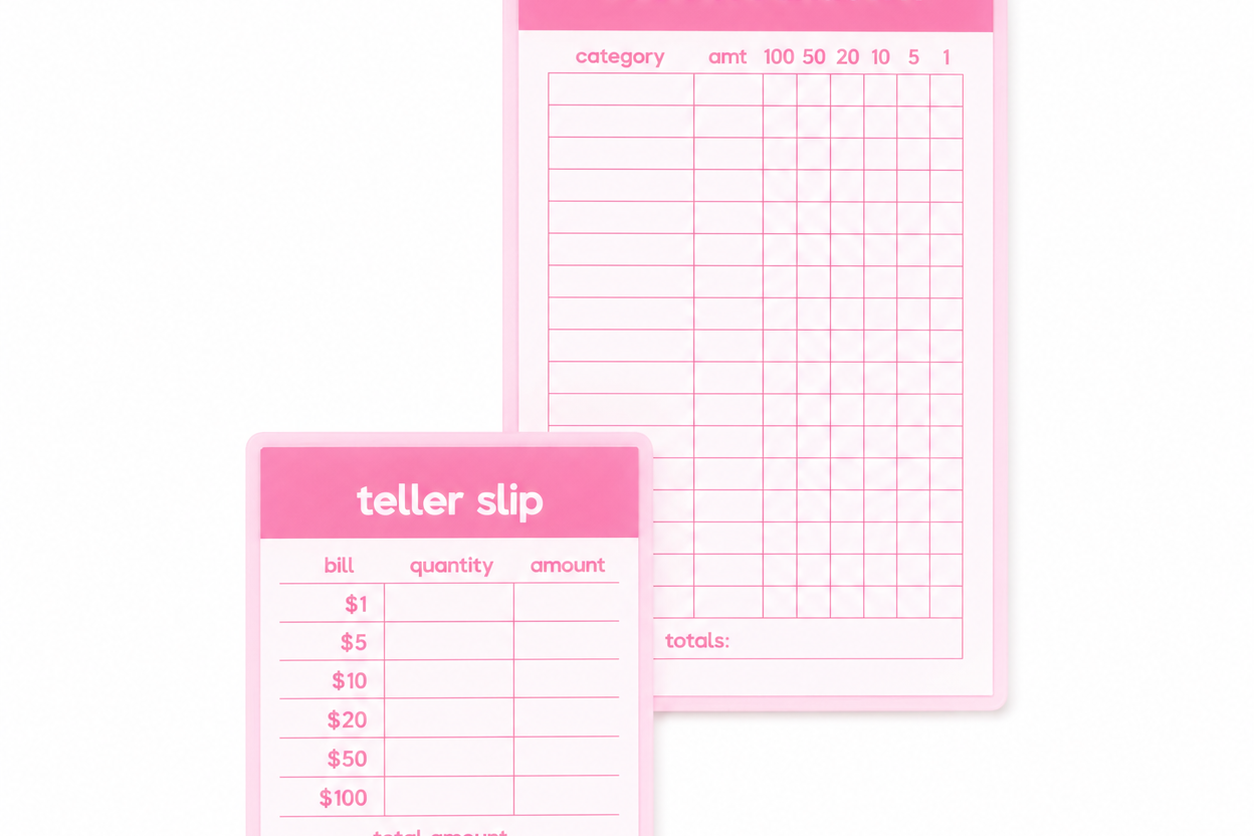
Go to your bank or ATM. Withdraw the total in a mix of small bills (lots of $5s, $10s, and $20s). Avoid $100s,they're harder to break and harder to spend in pieces. Divide the cash into labeled envelopes by category.
This is the whole game. Going to the grocery store? Take the grocery envelope. Coffee with a friend? Eating out envelope. When an envelope is empty, you stop spending in that category, or you consciously move money from another envelope and accept the trade-off.
- Trying to stuff every category at once.Start with just groceries and eating out for your first month. Add more once you've got the rhythm.
- Stuffing your fixed bills.Rent doesn't go in an envelope. Cash stuffing is only for variable categories.
- Refilling envelopes mid-month.The whole point is the limit. If groceries hit zero on day 22, eat what's in your pantry.
- Not keeping the cash safe.Use a zippered binder so envelopes don't fall out.
Anything left over in your envelopes is a win. You have three options:
- Roll it forwardinto next month's same envelope
- Move it to savings:start a$1,500 challengeor sinking fund
- Pay extra debt:toss it at your highest-interest balance
Whatever you do, don't just spend it because it's there. The leftover is the proof that the system works.
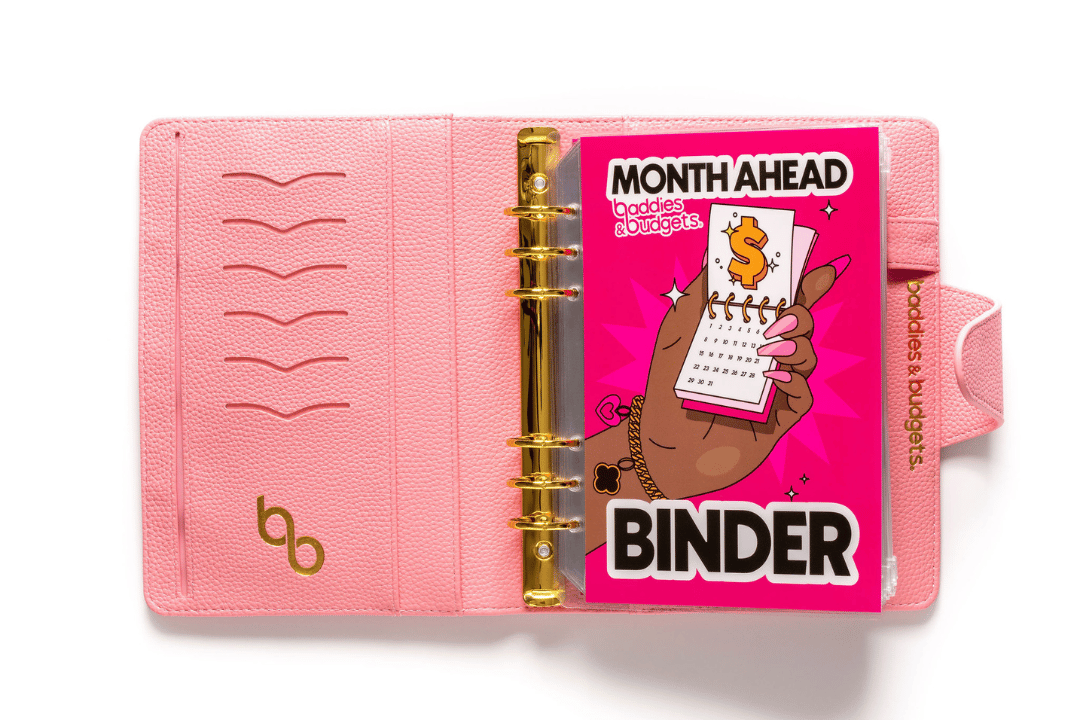
Don't want to DIY your envelopes? The A6 Patent Binder paired with our Double Pocket Envelopes gives you the exact setup that went viral on TikTok. It's zippered to keep your cash secure.
Ready to Level Up?
Follow us on Instagram for daily money tips, inspo, and community.
Follow @BaddiesnBudgets